
Serving on the Front Lines—And Behind the Scenes: Payroll at the Orange County Fire Authority


At California’s Orange County Fire Authority (OCFA), emergencies don’t follow schedules—and neither does the work that supports the first responders. Spread across 78 fire stations and serving unincorporated Orange County, along with 23 contract cities, the OCFA’s more than 1,500 employees form one of California’s most dynamic public safety forces.
While the OCFA’s firefighters battle wildfires, respond to medical calls, and deploy across state lines for disaster relief, that same urgency extends into the administrative backbone of the organization. Payroll here sustains a workforce that operates in life-or-death situations every day.
Rhonda Kawell, CPP, is the OCFA’s Payroll/AP Manager who leads the eight-person team managing this enormous task.
“What I believe has played a role in my success is a strong sense of determination and a genuine mindset to serve others,” said Kawell. “Those values have guided me throughout my career—whether it’s focusing on accuracy, accountability, or supporting employees by ensuring they are paid correctly and on time. That commitment to doing the work well and helping others has been a consistent motivator for me, regardless of the role I’ve held.”
Driven by the Payroll Mission
Kawell’s payroll career began in 1997. She was working for the City of Garden Grove as a customer service representative in utility billing when she heard that a position in the payroll department was opening. When the employee who was vacating the role learned that Kawell was interested, she recommended her as her replacement.
“What began as an opportunity quickly turned into a deliberate career choice,” said Kawell. “Once I stepped into the role, I found that payroll suited my skill set—I appreciated the structure, attention to detail, and responsibility that came with the work. I also gained a strong understanding of how critical accurate payroll is to employees and the organization. That experience sparked a genuine interest in payroll and set me on a path I’ve continued to build on throughout my career.”
Kawell stayed in the public sector, moving from the City of Garden Grove to the City of Long Beach, and finally on to the OCFA.
 Towards the Flames
The years prior to joining the OCFA saw Kawell develop the payroll and leadership skills that would serve her well in her demanding position. Mentors and role models played a critical role in her early career by providing guidance, perspective, and confidence as she navigated new responsibilities.
“Early on, I learned the technical aspects of my role, but mentors helped me understand the why behind decisions—especially around compliance, controls, and accountability,” said Kawell. “They also encouraged continuous learning and career growth.
“They challenged me to take on responsibilities outside my comfort zone, pursue training or certifications, and speak up with ideas. That support helped build my confidence and prepared me for leadership opportunities earlier than I might have pursued on my own.”
One such leadership opportunity was assisting with the setup and rollout of web-based timesheets. The transition required careful planning, coordination, and communication. Kawell worked closely with payroll, IT, supervisors, and end users to help configure the system, test functionality, and support employees through the transition. She helped to identify process gaps, ensure pay rules were accurately reflected in the system, and assisted with training and troubleshooting.
“The impact was significant,” she proudly said. “The new system improved timekeeping accuracy, reduced processing errors, and streamlined payroll workflows. It also strengthened accountability and made it easier for supervisors and employees to review and approve time faster.
“From a career perspective, this experience was valuable because it broadened my skills beyond day-to-day payroll processing. It gave me hands-on exposure to system implementation, change management, and cross-department collaboration. That experience increased my confidence, reinforced my interest in payroll operations and systems, and contributed to my professional growth by positioning me as someone who could be trusted to support improvement initiatives—not just maintain the status quo.”
| Don’t lose out on mentoring opportunities that can elevate your career. Sign up for PayrollOrg’s new Leadership Lens Series, a video-based, free for members, micromentoring series. |
Learning, Growth, PayrollOrg
Kawell credits a mix of formal education, professional training, and continuous learning for her career trajectory—and PayrollOrg has been an important part of that journey.
“Foundational coursework in accounting and business gave me a strong understanding of financial principles, compliance, and internal controls,” she said. “These classes helped me see payroll not just as a task-driven function, but as a critical component of organizational finance and employee trust.
“Ongoing professional development through webinars, seminars, and PayrollOrg resources has been essential in keeping my knowledge current. Staying engaged in continuing education has allowed me to adapt to changes in tax law, technology, and compliance requirements, ensuring accuracy and reliability in my work,” she said.
Kawell initially became a member of PayrollOrg (then the American Payroll Association) in 2012. Since then, her engagement has evolved as her payroll career has continued to grow. She earned her Certified Payroll Professional (CPP) credential in 2020.
“I was offered a position with an agency where obtaining my CPP credential within 18 months of hire was a requirement,” she said. “To prepare, I dedicated time to studying and completed the CPP Boot Camp® course prior to sitting for the exam. The process was challenging, but it was incredibly rewarding, and I am very proud of earning the credential. Beyond meeting the job requirement, obtaining my CPP was something I wanted to achieve for my own personal and professional growth.”
Kawell’s experience influences her management style. At the OCFA, she keeps a strong focus on her team’s professional growth.
“Developing the team while meeting daily operational demands is an ongoing challenge,” she said. “Coaching, performance management, and succession planning have to be intentionally built into a fast-paced environment where payroll must run smoothly every cycle.”
|

The Complexity of Fire Service Payroll
The OCFA’s roots trace back more than four decades. Originally formed as a county-operated department in 1980, the OCFA reorganized in 1995 as a Joint Powers Authority—an entity formed by two or more public agencies under California’s Joint Exercise of Powers Act to provide municipal services.
Since then, growth, regional collaboration, and shifting community needs have transformed the OCFA into a complex organization with seven divisions and 11 battalions that deliver fire protection and emergency medical services in Orange County and beyond.
Payroll at OCFA is anything but routine as firefighters and support staff operate under a wide range of schedules including 24-hour shifts, overtime assignments, emergency callbacks, and strike team deployments to disaster zones. Capturing time accurately across these varied schedules—as well as the special pays and premium pays required under California’s labor protection laws—calls for constant coordination, strong internal controls, and a deep understanding of fire service labor agreements.
“Another key challenge is multiple labor contracts and rules,” said Kawell.
Like other public employers in California, OCFA must negotiate with recognized employee organizations in good faith to reach formal Memorandums of Understanding (MOUs) covering wages, hours, and other terms of employment.
“OCFA operates under several MOUs, each with its own pay provisions, leave accruals, incentives, and overtime calculations,” said Kawell. “Ensuring compliance with these agreements—while also aligning with county policies, state and federal wage laws, and audit standards—adds a layer of complexity that requires both technical payroll expertise and careful attention to detail.”
In a public safety organization, payroll doesn’t pause during emergencies—it intensifies. Incidents like raging wildfires and out-of-state deployments to assist with search and rescue efforts create spikes in workload, often accompanied by unique compensation scenarios and urgent timelines.
During these periods, payroll becomes a critical support system for responders.
“Errors are not just financial—they affect morale, trust, and readiness,” said Kawell. “Payroll must perform flawlessly, even during disasters, large scale incidents, or emergency activations when workloads spike.
“During these events, ensuring employees are paid accurately and on time becomes even more critical, particularly with special pay provisions and overtime. These situations require close coordination with leadership, finance, and HR, as well as a high level of attention to detail, flexibility, and urgency. Supporting our responders during emergencies is an important part of ensuring they can remain focused on their mission.”
|

Leading Through Complexity
From managing fluctuating workloads to maintaining clear communication with field operations, HR, finance, unions, and employees, Kawell’s position as the OCFA payroll/AP manager sits at the intersection of multiple stakeholders. Payroll issues often carry urgency and emotion, making professionalism and clarity essential.
Overseeing an eight-person payroll team adds another layer of responsibility as balancing immovable deadlines with staff development, workload distribution, and constant communication is a daily challenge. The work requires more than technical knowledge; it demands strong leadership.
“Leading a team of this size has been both rewarding and challenging, particularly given the critical nature of payroll work,” said Kawell. “Ensuring consistent accuracy while supporting the team and managing competing priorities requires constant attention and strong processes.
“Another challenge is workload distribution. Payroll volumes fluctuate due to month-end processes, special pays, audits, system changes, and regulatory updates. Making sure work is distributed fairly—while also accounting for individual strengths, experience levels, and development goals—takes regular reassessment and flexibility.”
Meetings occupy a significant part of Kawell’s workday. At the time of this interview, the OCFA was in the “build” phase of a software implementation—meaning that much of Kawell’s time was spent collaborating with project teams, stakeholders, and vendors to review configurations, discuss requirements, and work through scenarios to ensure the systems align with operational and payroll needs.
“In between meetings, I’m reviewing documentation, validating pay rules, answering questions, and identifying potential impacts to payroll processes,” said Kawell. “This phase requires careful attention to detail and constant communication, as decisions made during the build and testing stages will directly affect accuracy, efficiency, and employee confidence once the systems go live. While my days may be meeting heavy, they are also highly collaborative and focused on long-term improvements that will strengthen payroll operations moving forward.”
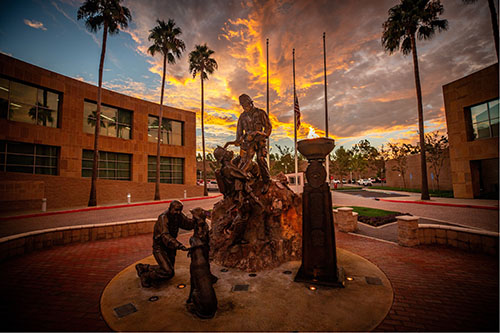 The Quiet Backbone of Public Safety
“Heading payroll at OCFA presents a set of challenges that are quite different from those in a more traditional organization,” said Kawell. “With a large, mission-critical workforce spread across Orange County, payroll accuracy and timeliness are essential—not only administratively, but operationally.”
While sirens and fire engines often define public perception of agencies like OCFA, the reality is that their effectiveness depends on countless behind-the-scenes functions working flawlessly together—payroll is one of them.
Payroll operates without fanfare but with unwavering importance—ensuring that every firefighter, paramedic, and staff member is supported accurately and on time, no matter the circumstances. In an environment defined by unpredictability, reliability becomes a form of service.
At the OCFA, it’s a mission just as critical as the one unfolding on the front lines.
Sean Tait Bircher is the Writer and Editor of Membership Publications for PayrollOrg.
 For more articles like this, read PAYTECH magazine (available in both printed and digital formats), free for PayrollOrg members!
PayrollOrg (PAYO), is the leader in payroll education, publications, and training. This nonprofit association conducts more than 300 payroll training conferences and seminars across the country each year and publishes a complete library of resource texts and newsletters. Representing more than 20,000 members, PAYO is the industry’s highly respected and collective voice in Washington, D.C. Get more information at www.payroll.org.
Not a member of PAYO? Check out the many benefits you get when you join!
